Why Land Value Feels Like a Mystery
I get calls all the time from folks who inherited a piece of land, or who've owned a back lot for thirty years, and they have no idea what it's worth. That's normal. Raw land doesn't have a Zillow number that means much, because every parcel is different, and Vermont's terrain makes that especially true. A flat, dry ten acres in the Champlain Valley and a steep, ledgy ten acres in the Green Mountains can be worlds apart in value even if they're the same size and same town.
So let me walk through what I actually look at when I'm sizing up a piece of Vermont land, and how that turns into a cash number.
The Big Drivers of Value
Road access and frontage. This is usually the first thing I check. Is it a state highway, a town-maintained road, or a Class 4 road? Class 4 roads aren't maintained by the town in winter, which affects how usable the land is and what it costs to keep access open. Land with deeded frontage on a maintained road is worth more than a landlocked parcel or one that only has a right-of-way.
Usable acreage, not just total acreage. Forty acres sounds impressive, but if half of it is wetland, ledge, or a 30 percent slope, the usable footprint might be a lot smaller. I look at soil type, drainage, and topography, because that determines whether someone could actually build, farm, or camp on it.
Location relative to towns and amenities. Land ten minutes from Brattleboro is going to carry more value than a similar parcel an hour from any town center, simply because of convenience and demand. Proximity to Route 30, Route 9, or a village center matters.
Views and water. A parcel with a long westward view toward the mountains, or frontage on a stream or pond, often commands a premium. Buyers pay for the feeling of the place, not just the acreage.
Timber and forest condition. Standing timber has real value, especially if it's been managed. A parcel with a healthy mixed hardwood stand is worth more than one that was heavily logged a few years back.
Utilities and access to power. Land near an existing power line is cheaper to develop than land requiring a long run of new poles. Same goes for whether there's an existing driveway cut in, or if one would need to be built from scratch.
Zoning and permitting realities. Some towns have more restrictive zoning than others, and larger parcels can sometimes trigger Act 250 review depending on the type of development proposed. I factor in what a buyer could realistically do with the land under current rules.
A Windham County Example
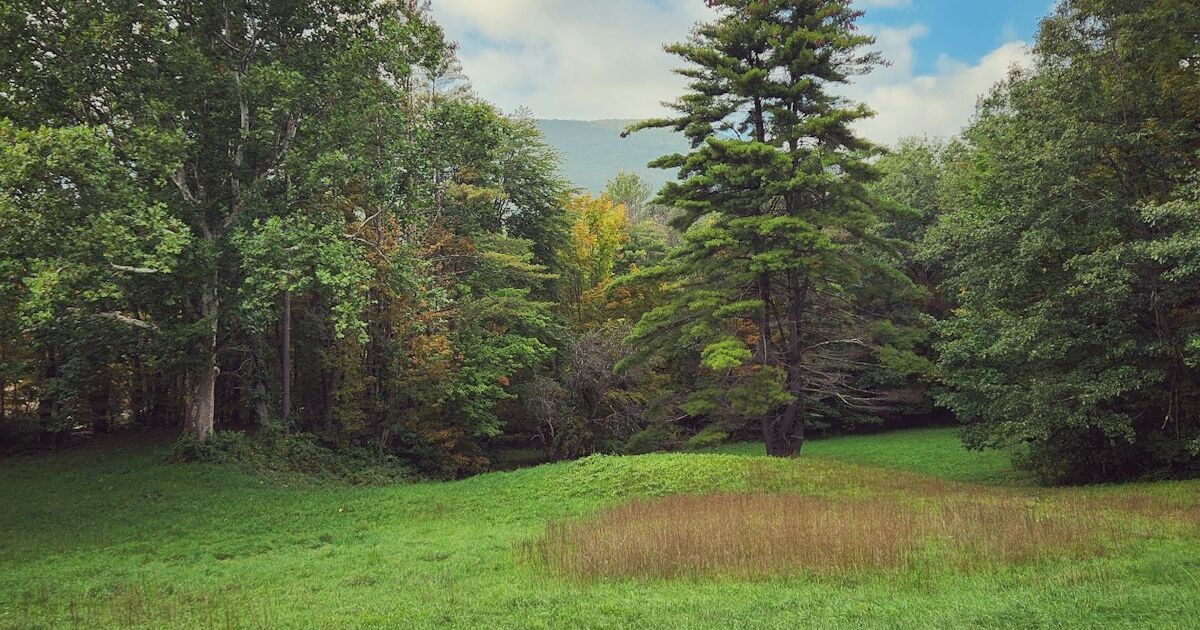
I looked at a property last year in the West River valley, not far outside Brattleboro. About 22 acres, mixed hardwood and softwood, with maybe 400 feet of frontage on a paved town road and a seasonal brook running through the back corner. No structures, no recent logging.
The land itself was gently sloped with a nice building envelope near the road frontage, and a view opening up toward the ridge behind it. Because of the road frontage, the usable building site, and the proximity to Brattleboro (about 15 minutes), that parcel was worth meaningfully more per acre than a similar-sized, landlocked parcel I looked at the same month up in a more remote part of the county.
That's the pattern across Vermont: road frontage and usability move the needle more than raw acreage.
Other Examples Around the State
- Northeast Kingdom: A 50-acre parcel near Island Pond with good frontage on a paved road but heavier wetland coverage in the interior. Beautiful, remote, but the wet ground pulled the usable acreage down, which affected the number.
- Champlain Valley: A flat 15-acre former hayfield near Vergennes with rich soil and easy road access. High usability, strong ag and building potential, priced accordingly higher per acre than rougher land nearby.
- Green Mountains: A steep 30-acre wooded lot outside Rochester with a Class 4 road for access. Gorgeous land, but the access situation and slope brought the value down compared to flatter parcels closer to the village.
How I Calculate a Cash Offer
Once I've walked the factors above, here's roughly how I build a number:
- I look at recent comparable land sales in that town and nearby towns, using town records and grand list data as a starting point.
- I check the town's listers' records and the property's SPAN number to understand assessed value, though assessed value and market value aren't always the same thing.
- I factor in the usable acreage, not just the deed acreage.
- I subtract what it would cost to make the land marketable again if there are any issues, road work, boundary questions, or overgrowth.
- I account for holding costs and time, since as a direct buyer I'm not listing the property and waiting for a retail buyer, I'm paying cash and closing on a timeline that works for the seller.
- I build in a fair margin for myself, because I'm buying to hold or resell, not flipping for a quick profit.
That gives me a number I can stand behind. It's not a lowball guess and it's not a number pulled from an online estimator that's never seen the property.
What I Don't Factor In (But People Worry About)
Sellers sometimes assume back taxes, Current Use penalties, or a messy title will tank their number. Those things get sorted out at the closing table by a Vermont real estate attorney, who handles the title search, the paperwork, and the recording's office. I'm not the one doing that work, and I don't try to be. My job is figuring out a fair price for the land as it sits.
If You're Wondering What Your Land Is Worth
Every property is different, and the only real way to know is to have someone actually look at the specifics, the road, the soil, the timber, the location. I buy land directly for cash across Vermont, from the Champlain Valley to the Northeast Kingdom to Windham County, and I'm happy to walk through what drives value on your specific parcel.
If you've got a piece of land you're curious about, reach out and I'll put together a straightforward cash offer, no obligation, no agents involved.